
Stuxnet: Apabila Kod Mengubah Kelajuan Sebuah MesinStuxnet: When Code Changed a Machine’s Speed
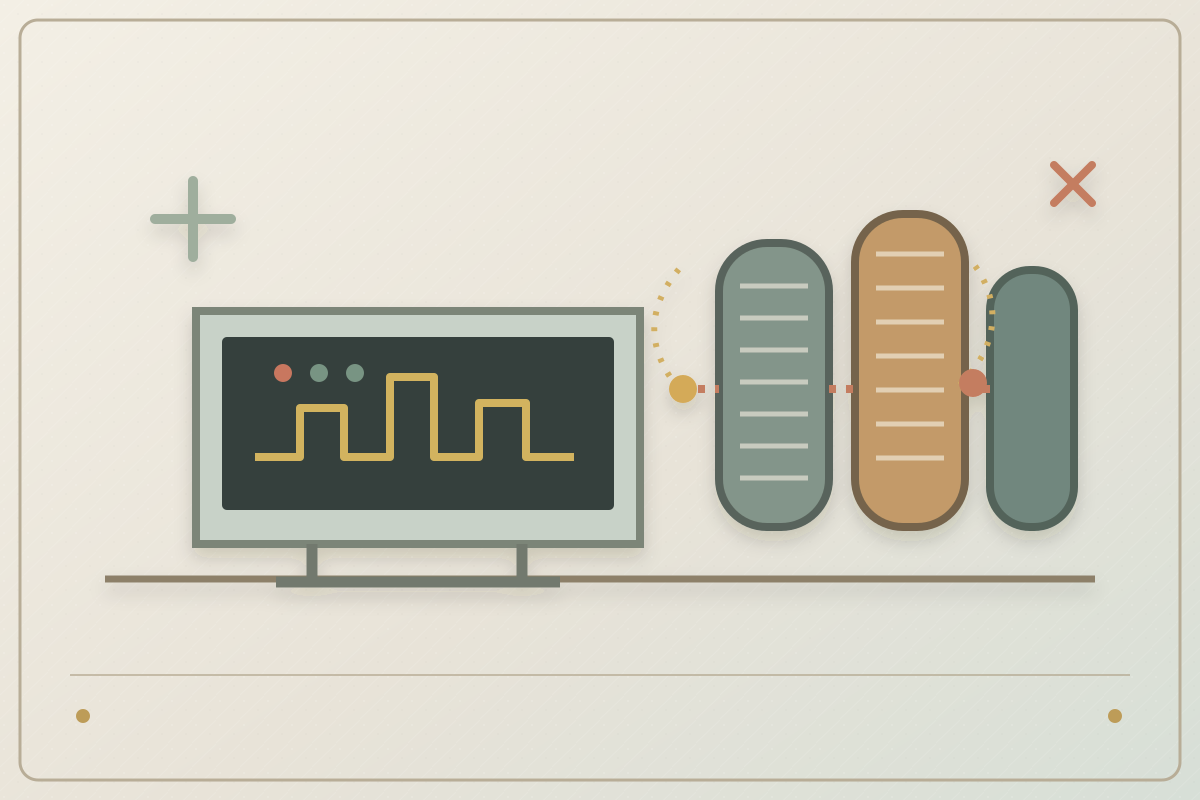
Bayangkan sebuah mesin berputar di dalam kilang. Skrin pengawasannya kelihatan normal, tetapi pengawal kecil yang mengarah motor menerima arahan yang sudah diubah. Inilah perkara yang menjadikan Stuxnet berbeza daripada virus yang sekadar memadam fail atau mengunci komputer.
APA ITU PLC?
Di kilang, PLC ialah komputer industri kecil yang mengawal urutan mesin: buka injap, hidupkan pam, naikkan kelajuan motor. Ia menerima ukuran sensor, menjalankan arahan, kemudian mengubah keadaan mesin. Skrin operator biasanya menunjukkan apa yang pengawal laporkan.
Stuxnet ialah malware Windows yang mencari konfigurasi khusus perisian kawalan industri Siemens Step 7. Ia boleh bergerak melalui komputer dan media boleh alih seperti pemacu USB. Tetapi ia bukan direka untuk merosakkan setiap komputer yang dijangkiti. Analisis kod menunjukkan bahawa bahagian serangannya hanya menyasarkan gabungan peralatan dan tetapan pengawal yang sangat khusus.
BAGAIMANA KOD MENJADI KEROSAKAN FIZIKAL?
Apabila menemui sistem yang sepadan, Stuxnet mengubah arahan kepada PLC. PLC kemudian mengubah cara motor dan pemacu frekuensi berfungsi, sedangkan perisian pengawasan boleh menerima bacaan yang kelihatan biasa. Pengendali mungkin melihat keadaan yang menenangkan sementara mesin mengalami perubahan yang tidak dijangka. Jika proses itu berulang, komponen mekanikal boleh haus atau rosak.
Penyelidik mengaitkan sasaran teknikal Stuxnet dengan sistem pengayaan uranium di Natanz, Iran. Butiran kod menyokong kesimpulan itu, tetapi kerajaan yang membangunkan dan melancarkannya tidak pernah mengaku secara rasmi. Cerita ini lebih tepat disebut operasi sabotaj siber yang disyaki mendapat sokongan negara, bukan kes yang semua pelakunya sudah dibuktikan.
APA PENGAJARANNYA?
Ancaman terhadap komputer industri bukan semata-mata tentang internet. Komputer kawalan mungkin dipisahkan daripada rangkaian pejabat, tetapi fail masih boleh dibawa melalui USB, komputer penyelenggaraan atau perisian pihak ketiga. Pengawal, sensor, paparan dan mesin fizikal perlu diperiksa sebagai satu sistem.
Stuxnet menunjukkan bahawa kod boleh menukar arahan menjadi pergerakan, haba atau tekanan. Tetapi ia bukan “virus ajaib” yang boleh meletupkan mana-mana kilang. Ia dibina untuk mencari persekitaran tertentu, dan kesannya bergantung pada mesin yang dikawalnya.
Rujukan: ENISA, Stuxnet Analysis: https://www.enisa.europa.eu/news/enisa-news/stuxnet-analysis
Symantec Security Response, W32.Stuxnet Dossier: https://css.csail.mit.edu/6.858/2014/readings/stuxnet.pdf
Imagine a machine spinning inside a factory. Its monitoring screen looks normal, but the small controller directing the motor has received changed instructions. That is what made Stuxnet different from malware that merely deletes files or locks a computer.
WHAT IS A PLC?
In a factory, a PLC is a small industrial computer that controls a machine sequence: open a valve, start a pump, change a motor’s speed. It reads sensors, runs instructions, and changes the equipment. The operator’s screen usually displays what the controller reports.
Stuxnet was Windows malware that searched for a specific configuration of Siemens Step 7 industrial-control software. It could spread through computers and removable media such as USB drives. But it was not designed to damage every computer it infected. Code analysis showed that its attack component targeted a very specific combination of equipment and controller settings.
HOW DOES CODE CAUSE PHYSICAL DAMAGE?
When Stuxnet found a matching system, it changed instructions sent to the PLC. The controller then altered how motors and frequency drives behaved, while monitoring software could receive readings that appeared ordinary. Operators might see reassuring values while machinery experienced unexpected changes. Repeated over time, that could wear or damage mechanical components.
Researchers connected Stuxnet’s technical target to uranium-enrichment equipment at Natanz, Iran. The code supports that conclusion, but the governments believed to have developed and deployed it have never formally admitted responsibility. It is more accurate to call it a suspected state-backed cyber-sabotage operation than to say every perpetrator has been proven.
WHAT CAN WE LEARN?
Threats to industrial computers are not only about the internet. A control computer may be separated from the office network, yet files can still arrive through USB drives, maintenance computers, or third-party software. Controllers, sensors, displays, and physical equipment have to be considered as one system.
Stuxnet showed how code can turn into motion, heat, or pressure. It was not a magic virus that could blow up any factory. It was built to look for a particular environment, and its effect depended on the machinery it controlled.
References: ENISA, Stuxnet Analysis: https://www.enisa.europa.eu/news/enisa-news/stuxnet-analysis
Symantec Security Response, W32.Stuxnet Dossier: https://css.csail.mit.edu/6.858/2014/readings/stuxnet.pdf
RUANG BUALTHE CONVERSATION
Apa yang kau fikir?What do you think? (0)
Jadi yang pertama mulakan perbualan.Start the conversation.